
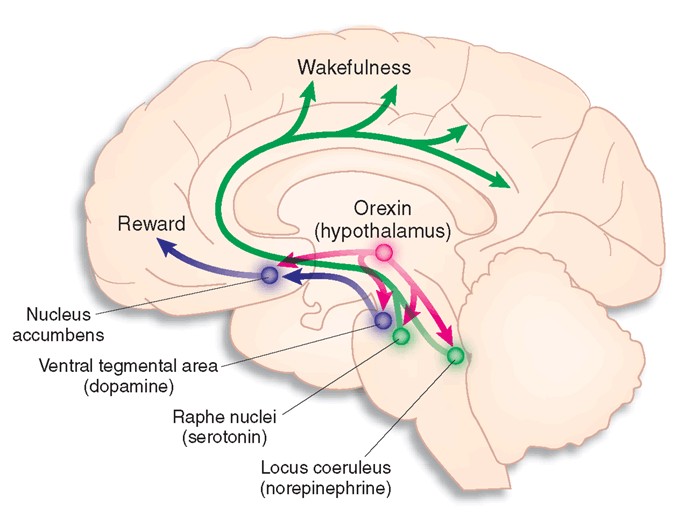
- Orexin brain neurotransmitters control sleep and appetite
- Blocking Orexin helps reduce the wakefulness state
- Already in the market as a sleep-aid
- Natural Orexin-Sleep herbs: Lotus, Poria, and others
The Orexin neurotransmitter or neuro-hormone system in the brain controls important basic functions like appetite and sleep, and this might explain why some herbs are particularly effective in helping with sleep issues. In fact, a major sleep medication known as Suvorexant that targets orexin-receptors has been on the market for quite some time since 2014. A Japanese clinical study found that 74% of those using it had improvements in sleep. While it’s true that medications are typically much stronger than natural products, there is a large market for all-natural based remedies for people wanting to avoid side effects or addiction to prescriptions.
Orexin consists of two different peptides (made up of amino acids) in the brain and is one of the mechanisms controlling our wakefulness versus sleepiness state. Over-activation of the orexin brain receptors leads to a state of wakefulness even when we want to fall asleep at bedtime. Natural product researchers have tested which plant-based bioactives or extracts can block the orexin-induced wakefulness state, uncovering great potential for improving sleep. Some of these are already known traditionally for relaxing or sleep-promoting effects, especially Poria cocos (Fu Ling), the serene Lotus, and Holy Basil.
Centella or Gotu Kola extract has sleep benefits according to a pharmacological study that tested its effects on locomotor activity and orexin antagonism. Very low doses of extracts were used, from 2.5 μg/mL to 10 μg/ml, for reducing the expression of orexin and wakefulness in the sleep-wake cycle. The extract was able to improve the sleep activity of the larva insomnia model by making the total sleep time longer (Afif, 2024).
Bioactives tested from Holy Basil (Ocimum tenuiflorum) and Poria have some potential too. They have high binding affinity with both orexin receptors, type 1 (OX1R) and type 2 (OX2R), and even surpassed commercial drugs used in insomnia (Ranteh, 2024).
Lotus (seed and stamen flower part) contains the alkaloid neferine and is an orexin receptor antagonist which also partly explains Lotus’s traditional reputation for sleep and relaxing effects (He, 2023).
Draco typically has Poria and Centella extracts in stock; Lotus stamen and Holy Basil are a custom order
Cosmetic Corner: Lotus flower stamen anti-aging bioactivity
Nelumbo nucifera Gaertn., or Lotus stamen has skin anti-aging potential by inhibiting collagenase (the enzyme that degrades collagen) and tyrosinase (the enzyme that causes pigmentation). One of the flavonoids found in the flower stamen was kaempferol-3-O-robinobioside which displayed robust inhibitory activity against collagenase (58.24 ± 8.27%), elastase (26.29 ± 7.16%), and tyrosinase (69.84 ± 6.07%) (Nutho, 2023). These can help with preserving skin collagen levels and elasticity, and help reduce excess hyper-pigmentation or blemishes.